
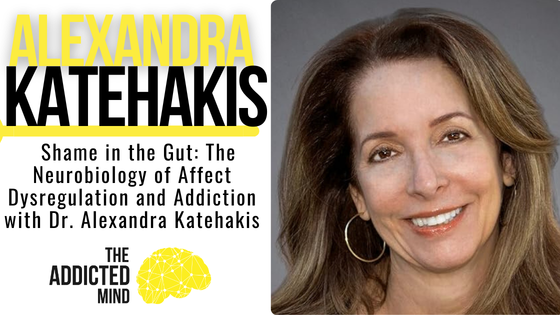
In this episode, Duane Osterlind sits down with Dr. Alexandra Katehakis, founder of the Center for Healthy Sex, to explore the complex relationship between shame, affect dysregulation, and addiction. Dr. Katehakis breaks down why shame isn’t just a “bad feeling” but a survival-based biological process rooted in our nervous system and early childhood development.
Key Highlights
1. What is Shame? (The Gut Connection)
Shame is a pro-social function embedded in the human organism from birth. Unlike many other emotions, shame is primarily located in the enteric nervous system (the gut).
- The Biology: When we experience shame, we feel a visceral “drop.” This is a rapid shift from a high-dopamine state (joy or excitement) to a low-dopamine state (collapse).
- The “No” Moment: Around 18 months, a child experiences the “genesis of shame” when a parent must use a firm “No” to protect them. In a healthy relationship, this is a temporary state.
2. Rupture and Repair: The Building Blocks of Resilience
- Healthy Dyad: A parent shames a child (rupture) but immediately follows up with soothing and “motherese” (repair). This teaches the child’s nervous system how to regulate itself.
- Toxic Shame: When shaming is chronic and unrepaired, “states become traits.” The child remains in a collapsed, shame-based state, leading to pathological dissociation or chronic depression.
3. Addiction as “Auto-Regulation”
Dr. Katehakis posits that addiction is often a result of affect dysregulation. If a person lacks the internal capacity to regulate their emotions (due to a lack of interactive regulation in childhood), they turn to external sources to “auto-regulate.”
- The Cycle: People use substances or behaviors (sex, gambling, shopping) to escape the painful, “dead” feeling of a shame-based core.
- The Body: Chronic shame results in low dopamine tone, often manifesting as a “limp” or depleted physical presence.
4. Shame and Identity
Shame deeply impacts how we view ourselves and interact with the world:
- External Locus of Control: Without internal regulation, people look outward for validation, often leading to poor boundaries and becoming susceptible to exploitation.
- The Victim/Perpetrator Paradox: In adulthood, those with toxic shame may “perpetrate from a victim position.” They use their shame to avoid accountability, forcing partners to caretake them rather than addressing the original issue.
Recovery and Hope
Healing from chronic shame is a long-term process (often 3–5 years), but change is possible:
- Ownership: Admitting to the behaviors and secrets without defense or minimization.
- Community: Utilizing 12-step programs or therapy to experience “interactive regulation” with others.
- Healthy Shame: Learning to use shame as a pro-social “lane marker” that helps us stay in integrity, rather than a weight that collapses our identity.
“You can’t undo shame by yourself. You really have to have a community of concern to help you through it.” — Dr. Alexandra Katehakis
Resources Mentioned
- Books: Sex Addiction as Affect Dysregulation by Alexandra Katehakis.
- Experts: Allan Schore (Affect Regulation), Bruce Perry (Trauma and Development), Dan Siegel (Attachment).
- Center for Healthy Sex: Located in Los Angeles, CA.
Sex Addiction as Affect Dysregulation: A Neurobiological Relational Model
If you live in California and are looking for counseling or therapy please check out Novus Mindful Life Counseling and Recovery Center
We want to hear from you. Leave us a message or ask us a question: https://www.speakpipe.com/addictedmind