
Worksheet: Healing Power of Connection
Ask people what the hardest part of addiction was, and they often won’t say the drugs or the alcohol. They’ll say the loneliness. Because addiction, at its core, is about isolation and shame. It’s that crushing feeling of being in a crowded room and feeling completely invisible. It’s the belief that if people really knew you—the real you with all your secrets and shame—they would run away.
But what if the medicine for that loneliness isn’t just sobriety? What if the medicine is people?
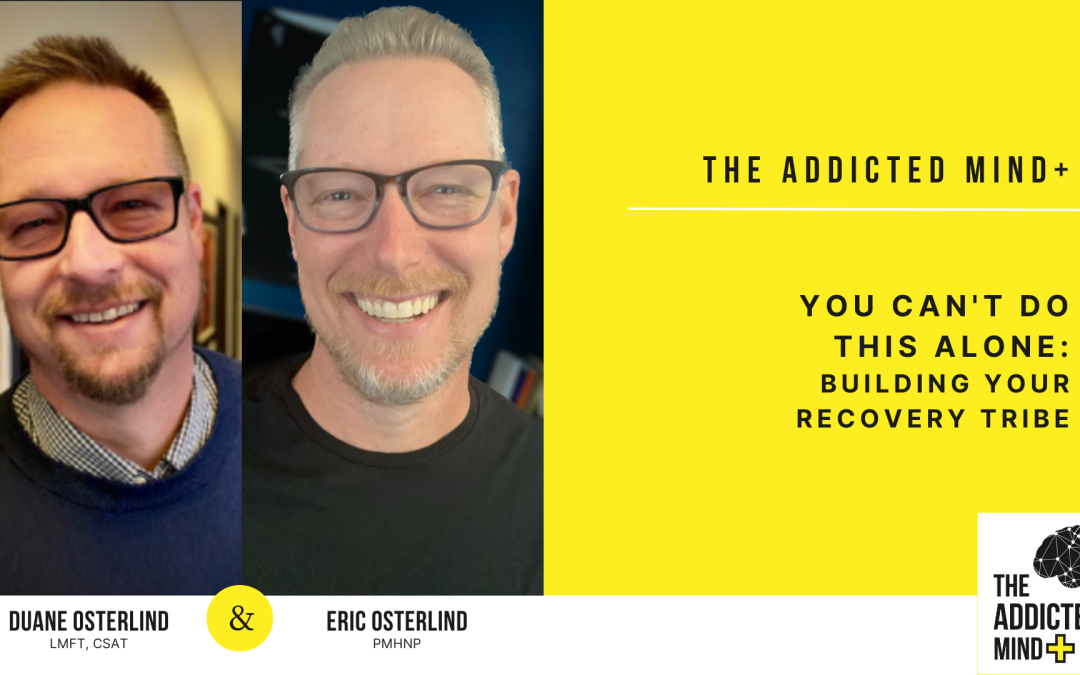
In this powerful episode of The Addicted Mind Plus, hosts Duane Osterlind and Eric Osterlind explore what they believe is the single most powerful predictor of long-term recovery success: connection. Not willpower. Not perfect meetings attendance. But belonging to a tribe, a community, a place where you’re not alone.
Addiction demands secrecy. It thrives in the dark. Over time, you stop answering the phone, you stop going to events. You isolate to protect the addiction, but you end up trapping yourself with your own worst thoughts. And even in recovery, that instinct to hide can still linger. You might feel like a burden, or you might think, “I can do this on my own. I don’t need help.” But that’s a dangerous lie. When shame says “I am bad” and isolation says “I am alone,” relapse becomes almost inevitable.
The vicious cycle works like this: we isolate ourselves because we feel shame, and then that isolation breeds more shame. Breaking that cycle requires doing the one thing that feels most unnatural—reaching out. As journalist Johan Hari famously summarized from his research, “The opposite of addiction is not sobriety. The opposite of addiction is connection.” But shame tells us we’re not worthy of that connection, so we don’t risk it.
The evidence is overwhelming. Whether it’s AA, NA, SMART Recovery, or group therapy, the data shows that people who engage in supportive community have significantly better outcomes than those who try to go it alone. It’s not just about having people around you—it’s about shared experience. When you walk into a room and hear someone tell your story, there’s a profound shift. The shame starts to evaporate because you realize: “I’m not the only one. I’m not crazy, bad, or sick. I’m not alone.”
Group settings provide a buffer against stress. When we’re with safe people, our nervous system can actually co-regulate. We feel safer physically and emotionally. The community provides accountability—someone to notice if you’re struggling. It provides encouragement—someone to cheer when you win. And perhaps most importantly, we borrow their hope until we can rebuild our own. We lean on their energy when ours runs out.
But finding community can feel overwhelming, especially if you have social anxiety or fear of judgment. That’s why Duane and Eric break it down into two simple, manageable steps you can take this week.
Step one: Identify just one potential connection point. This could be looking up an online meeting and putting it in your calendar. It could be texting one friend and saying, “Hey, can we grab coffee?” Or maybe it’s looking for a sober hiking group or book club. Just find one place where healthy people are gathering that interests you.
Step two: Practice active listening in one conversation. Connection is a two-way street, but sometimes we’re so anxious about what we’re going to say that we forget to listen. This week, in just one conversation, put down your phone, look someone in the eye, and listen to understand—not to reply. Reflect back what you heard: “It sounds like you had a really tough day.” This simple act builds instant intimacy and trust.
Remember, by participating in community, you aren’t just getting help—you’re giving it. Your presence helps someone else feel less alone, and that can be a powerful engine for your own self-worth and shame resilience.
You don’t have to do this alone. Reach out, connect, and let the healing begin.
Key Topics
• The isolation trap of addiction: How addiction thrives in secrecy and loneliness, making connection the true antidote to recovery
• Shame as a barrier to connection: Understanding why shame tells us we’re not worthy and keeps us from reaching out for help
• The opposite of addiction is connection: Johan Hari’s powerful research showing community as the single most powerful predictor of recovery success
• Co-regulation in community: How being with safe people allows our nervous systems to calm down and feel safer physically and emotionally
• Two actionable steps for building connection: Identifying one connection point and practicing active listening this week
• From lone wolf to pack member: Moving from vulnerable isolation to being part of a supportive network that protects and sustains you
• The gift of giving back: How your presence in community helps others feel less alone and builds your own sense of purpose
Timestamps
[00:01:30] – The stark reality: The hardest part of addiction isn’t the substances—it’s the crushing loneliness
[00:03:00] – The vicious cycle: How shame and isolation feed each other and make relapse almost inevitable
[00:05:00] – Johan Hari’s breakthrough insight: “The opposite of addiction is not sobriety—the opposite is connection”
[00:06:30] – The profound shift: What happens when you hear someone tell your story in a room full of people
[00:07:00] – Co-regulation explained: How safe people help calm our nervous system when we can’t do it alone
[00:08:00] – Actionable Step #1: Identifying one potential connection point you can take this week
[00:10:00] – Actionable Step #2: Practicing active listening to build instant intimacy and trust
Follow and Review: We’d love it even more if you could drop a review or 5-star rating over on Apple Podcasts. Simply select “Ratings and Reviews” and “Write a Review” then a quick line with your favorite part of the episode. It only takes a second and it helps spread the word about the podcast.
Supporting Resources:
If you live in California and are looking for counseling or therapy please check out Novus Mindful Life Counseling and Recovery Center
We want to hear from you. Leave us a message or ask us a question: https://www.speakpipe.com/addictedmind