
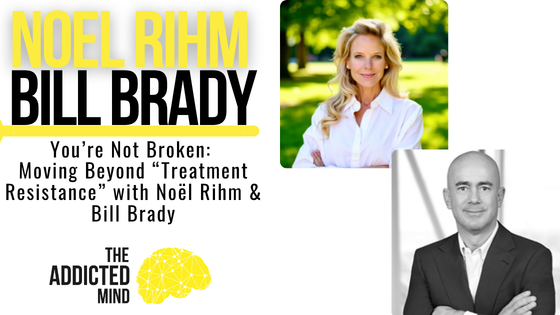
In this episode of The Addicted Mind, Duane Osterlind talks with Noel Rihm and Bill Brady, founders of Kaleidoscope. Both Noel and Bill spent decades as high-functioning professionals—Noel in healthcare leadership and Bill as a high-powered Wall Street lawyer—while battling severe, life-threatening alcoholism.
After years of being labeled “treatment resistant” by traditional rehabs, they discovered that the problem wasn’t their lack of willpower; it was that the root cause—unprocessed trauma—had never been addressed. They discuss how EMDR, psychedelic-assisted therapy, and a “bespoke” approach to healing allowed them to move from “white-knuckling” sobriety to living as “unburdened souls.”
Guests:
Noel Rihm
A veteran of the healthcare industry for over 25 years, Noel struggled with alcoholism for three decades. Despite cumulative years in residential treatment and AA, she found true liberation through EMDR (Eye Movement Desensitization and Reprocessing), which resolved the trauma symptoms that had driven her addiction for 30 years in just six sessions.
Bill Brady
Bill spent 25 years in Wall Street finance and private equity. To the outside world, he was “killing it,” but internally, he was consuming up to two liters of vodka a day. After traditional treatments failed and hope was gone, Bill found a “miracle” through psychedelic therapy, which allowed him to forgive himself and reconnect with his life.
Key Discussion Points
1. The Myth of the “Treatment Resistant” Addict
- The Problem: Traditional rehab often treats the habit without addressing the pain driving it.
- The Reality: If treatment isn’t working, it is often a failure of the protocol, not the patient.
2. Redefining Trauma
- The Definition: Trauma is not what happened to you; it is how your nervous system responds to what happened.
- The “Paper Cut” Effect: Small, recurring “little T” traumas—like a dismissive remark in childhood—can create a false narrative of unworthiness that persists for decades.
3. The Kaleidoscope Model: The Arc of Healing
- Stabilization: Getting the body and mind regulated.
- Preparation: Gentle, trauma-informed work to prepare the soul for a shift.
- The Shift: Utilizing tools like EMDR, psychedelic therapy, or somatic processing to “unhook” from the trauma.
- Integration: The most critical phase—having a “Sherpa” (permanent coach) to help apply insights to daily life.
4. The “Sherpa” and Family Healing
- The Sherpa Model: Unlike traditional rehab where the relationship ends at discharge, Kaleidoscope provides a permanent guide to help navigate the “scavenger hunt” of resources in the local community.
- Healing the System: In the final week of treatment, spouses and significant others are invited to undergo their own healing, ensuring the addict doesn’t return to a toxic or unhealed home environment.
Memorable Quotes
“From the outside, it looked like I was killing it. From the inside, it looked like I was killing myself.” — Bill Brady
“Unprocessed trauma is like a keg of dynamite waiting to go off. I knew how to address my trauma: Two liters of vodka reliably would get me into a blackout.” — Noel Rihm
“It’s not about not drinking. It’s about not wanting to.” — Bill Brady
Resources Mentioned
- Kaleidoscope:
- Innovation Lab: Kaleidoscope’s research-driven facility in Cabo, focused on clinical rigor and tracking healing outcomes.
- Key Therapies: EMDR, Psychedelic-Assisted Therapy, and Somatic Processing.
Links to Guests Below:
Contact The Addicted Mind:
- Website: theaddictedmind.com
Follow and Review: We’d love it even more if you could drop a review or 5-star rating over on Apple Podcasts. Simply select “Ratings and Reviews” and “Write a Review” then a quick line with your favorite part of the episode. It only takes a second and it helps spread the word about the podcast.
Supporting Resources:
If you live in California and are looking for counseling or therapy please check out Novus Mindful Life Counseling and Recovery Center
We want to hear from you. Leave us a message or ask us a question: https://www.speakpipe.com/addictedmind